Acne scarring is a common long-term skin concern that can remain long after active acne has resolved. Scarring develops when inflammation within the skin damages collagen and deeper skin structures during the healing process.
For many people, acne scarring can affect not only skin texture and appearance, but also confidence and quality of life. The good news is that modern dermatology and cosmetic treatments can significantly improve the appearance of acne scars and overall skin quality.
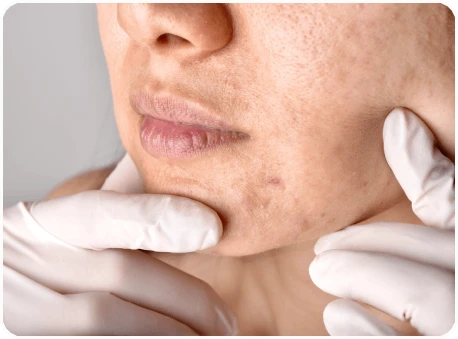
Acne scarring occurs when inflamed acne lesions damage the skin and underlying tissue. During healing, the body produces collagen to repair the area, however, too little or too much collagen production can lead to visible scarring.
Early management of active acne is one of the most important ways to reduce the risk of permanent scarring. Scarring generally responds best to treatments when the skin is treated early on and guided through the healing phase for effective issue and collage regeneration.
Acne scar scan vary greatly in appearance and depth. Many patients have a combination of scar types.
These are the most common acne scars and occur due to collagen loss.
Deep, narrow scars extending into the skin. Often difficult to treat with a single modality.
Round or oval depressions with defined edges that may be shallow or deep.
Soft, wave-like depressions in the skin caused by fibrous bands pulling the skin downward.
These scars occur when excess collagen forms during healing.
Features may include:
Post-Inflammatory Redness & Pigmentation
Successful treatment begins with a detailed skin assessment.
At our clinic, assessment may include:
Because every patient’s skin is different, treatment plans are highly individualised.
Most acne scars improve best with a combination approach of different treatment star getting texture, collagen stimulation and skin renewal. It can take some time and multiple ongoing treatments until desired results are achieved. Often a combination of multiple different lasers or modalities can be used in the same treatment session for optimal outcomes.